Canoe journey crosses colonial border, upholding syilx sovereignty: ‘this is still our territory’
For the 22nd year in a row, the Sukʷnaqin July 4th Canoe Journey made the trip from nk’mip into the ‘United States’ and back


For the 22nd year in a row, syilx Okanagan people took a canoe journey across the invisible border between “Canada” and the “United States” that divides their territory — challenging a colonial marker that continues to infringe upon their unceded homelands.
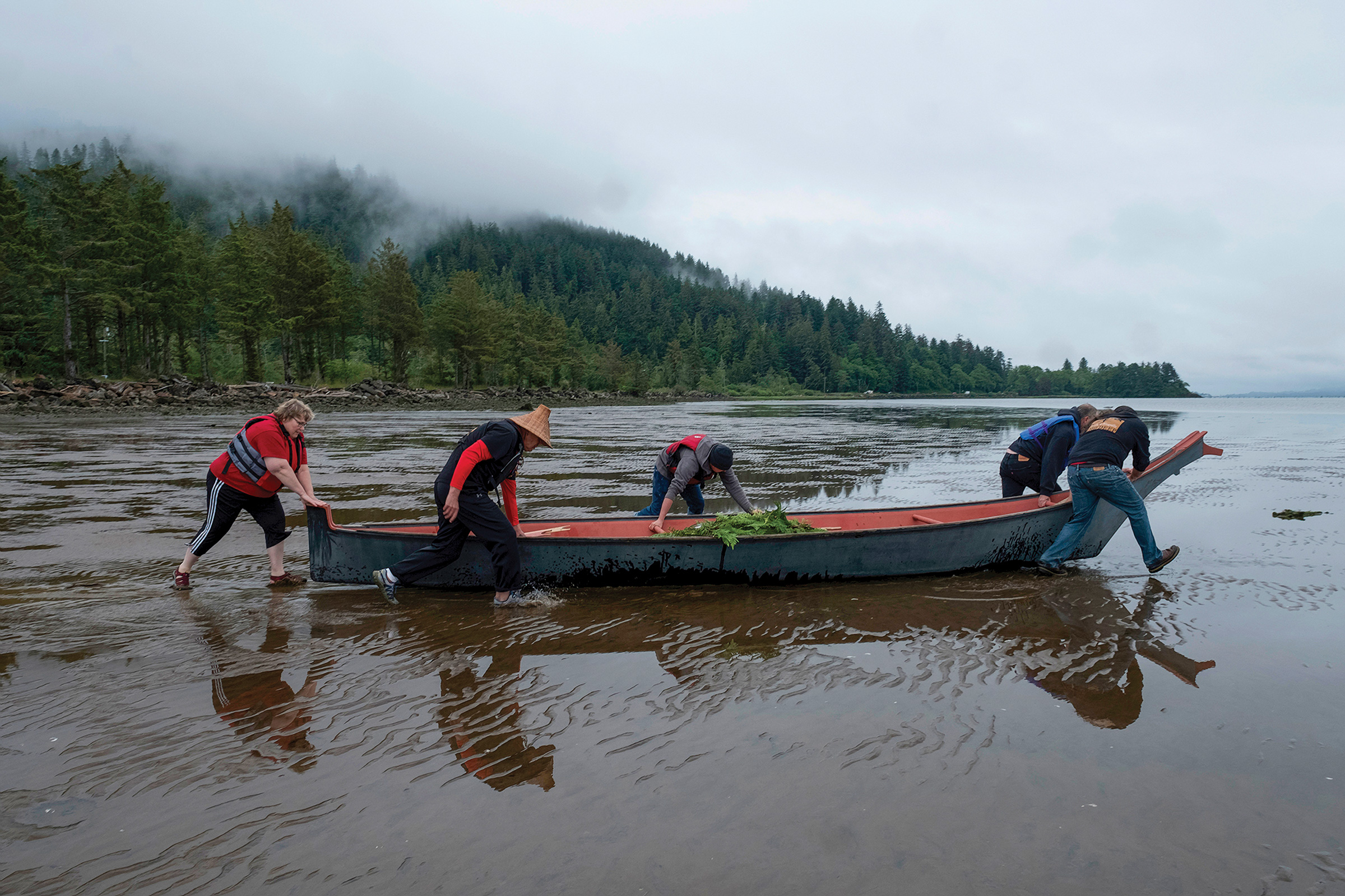
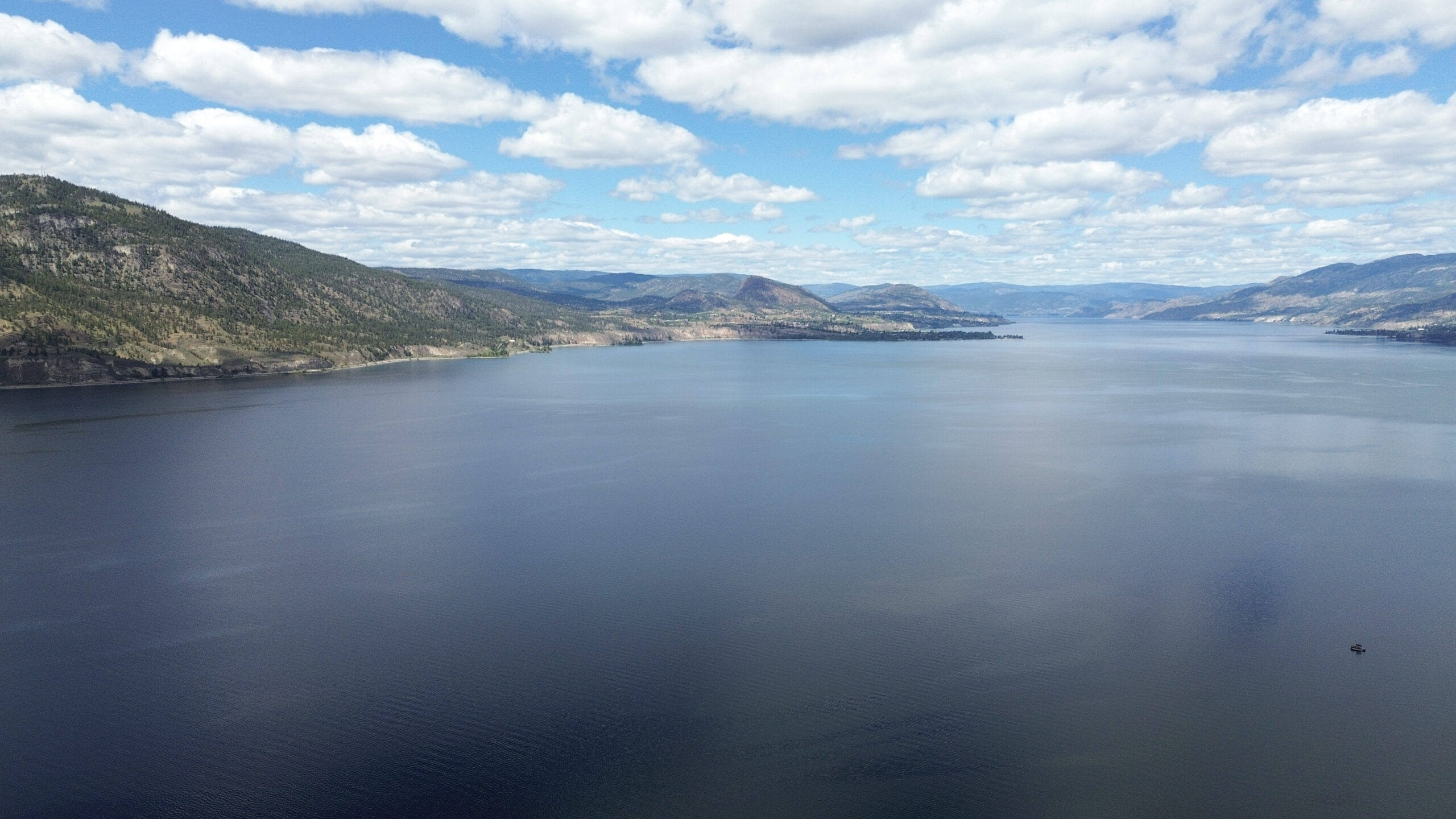
Dozens of pullers hauled at least 10 boats, including several dugout canoes, to the shore of nk’mip (Osoyoos Lake) in sw̓iw̓s (Osoyoos) in syilx homelands on Tuesday. The group sailed through the lake’s waters on the way to Oroville, Washington, before returning later in the day.
When the vessels crossed the border, the pullers did so on their terms without checking in with guards — exercising their rights under the historic Jay Treaty, which guarantees Indigenous people the free right to travel between the two countries. Organizers of the event, however, asked that the paddlers bring a status or treaty card with them, with respect to protocol.
“We haven’t given up our land or rights to the land,” said Herman Edward of the Lower Similkameen Indian Band, one of founders and organizers of the annual Sukʷnaqin July 4th Canoe Journey.
“We’re letting our people know that this is still our territory.”

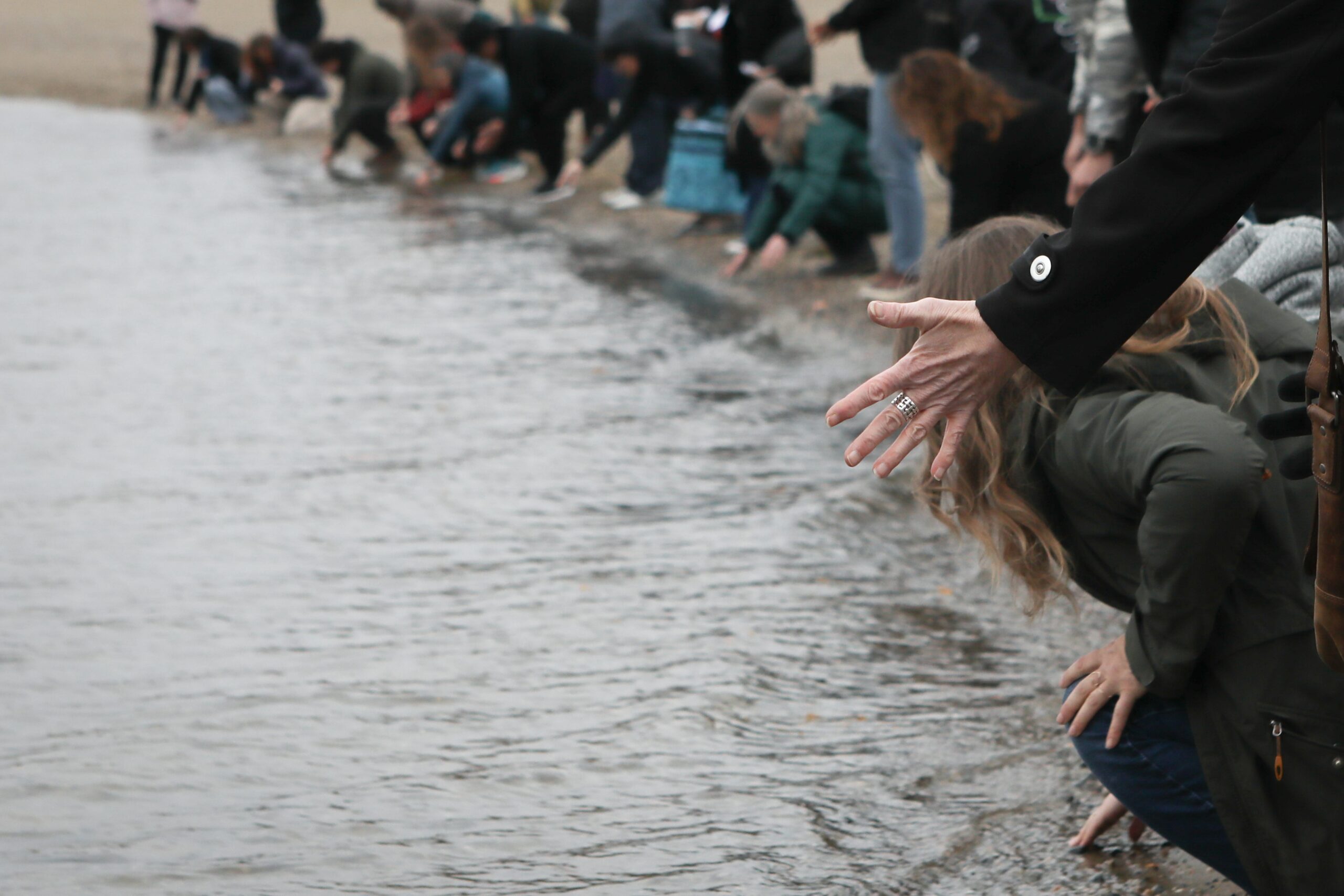
Before embarking for Oroville, prayers and tobacco offerings were made for the paddlers to protect them on their journey.
“When you’re on the water, you’re not only praying for yourself, but you’re praying for the tmxʷulaxʷ (the land). You’re praying for all things that the water gives life to,” said Edward.
“That’s what we do, we pray for the water.”

The border-crossing canoe journey is an annual event to not only remind the two countries of the syilx Okanagan Nation’s sovereignty, but to challenge the different forms of division that the border creates for the nation, Edward said.
In 2010, for example, a Sinixt man and member of the Lakes Tribe of the Colville Confederated Tribes in Washington State, hunted an elk in B.C. and was charged because he wasn’t a resident. Richard Desautel argued that he was exercising his Aboriginal title by hunting in the traditional territory of his Sinixt ancestors — and the case later rose to the Supreme Court of Canada.
In the end, the majority of the Supreme Court judges ruled that “excluding Aboriginal peoples who moved or were forced to move, or whose territory was divided by a border, would add to the injustice of colonialism.”
However, Edward said that the border continues to cause problems for his people and that there are still some who cannot cross to make it to significant events in their own nation’s territories.
“Sometimes they get a misdemeanour, they can’t even cross. They can’t come to our ceremonies or celebrations. That’s why we do this,” he said.
“You guys always gotta know that you don’t have a border. We’re sqilxw (people of the land).”

Edward said that the syilx Okanagan Nation’s territory extends from north of what’s been briefly known as Vernon, B.C., down to Colville, Washington. He began carving canoes in 2000 with the help of his mentors, the late Gordon Marchand, the late Richard Louis Sr. and Mervin Louis.
“We’ve been doing this for 22 years and we’re still going to carry on. People always ask me every year if we’re going to have it, and I say, ‘Yeah. For as long as I’m alive, I’m going to do this,’” said Edward.
“I’m going to do this as long as I can. I repair the canoes and get them ready every year.”

This year, skwelcampt from the syilx Okanagan and Secwépemc nations brought a wooden staff with him that’s been handed down from a lineage of syilx/Okanagan hereditary chiefs for more than 200 years.
The staff was given to Pelka’mulox the third, a prominent grand chief of the syilx/Okanagan people, by King George III sometime in the late 1700s to early 1800s, skwelcampt said.

“They gave this staff in recognition to our sovereignty. They gave this staff in recognition of our hereditary political structure,” said skwelcampt.
“They gave this staff in recognition for all of us to recognize our authority here.”

skwelcampt said that the staff — which is just one of a handful that was given to different nations — has been in hiding for more than 200 years, due to fear and animosity from the government and the church. But he felt confident and comfortable enough to bring the staff with him to the launch of the canoe journey, saying that “the people are awakening.”

“On behalf of the people here, I carry this staff that recognizes our authority as syilx, as sukanaqin. Not just our people, but the Secwépemc, our allies,” he said.
“The Secwépemc, the Nlaka’pamux, the Stʼatʼimc – all the allies of our people here, that we were told not to fight one another. We have bigger fights to carry on.”
– With files from Athena Bonneau
Author
We live in a media ecosystem that thrives on misinformation. Big Tech and AI companies are consuming the work of real human beings and Canadian news has been banned on Facebook and Instagram.
And yet, I have hope for journalism because of the work we’re doing at IndigiNews.
At IndigiNews, we embody tâpwêwin — the Cree value of integrity and responsibility in truth-telling. We are committed to our independent, Indigenous-led newsroom rooted in community, accountability, and relationality. We believe storytelling is a sacred fire that connects our pasts, presents, and futures through the storytellers in our Storytelling Lodge. IndigiNews creates space for Indigenous journalists, storytellers, Knowledge Keepers, and communities to gather, learn, and share stories that matter.
As a registered charity, we are building a fire that allows our work not just to ignite but to thrive. Rather than relying on advertising or corporate acquisition, IndigiNews is sustained by people like you who believe Indigenous stories are important for the future of our communities.
Your support is making a real difference.
Our community of supporters, our Firekeepers, make it possible to grow our newsroom, publish award-winning journalism, train emerging Indigenous journalists through initiatives like the ReFocus Photojournalism Fellowship, and publish trustworthy stories that serve our communities across the country. Every story we publish helps fill in gaps left by mainstream media and ensures Indigenous perspectives are represented with care, accuracy and respect.
But there is still more work to do.
As the media landscape becomes more and more uncertain, community support is as necessary and essential as it’s ever been. Every new Firekeeper helps protect the independence of our newsroom and strengthens journalism that is accountable to our many and varied communities over corporations.
That’s why we’re inviting you to become a Firekeeper.
Firekeepers tend to and protect the sacred fire. Your monthly contributions directly support IndigiNews’s Storytelling Lodge, helps sustain our independent, Indigenous-led newsroom, and ensures future generations of Indigenous storytellers have the resources they need to do the work.
As a registered Canadian charity, all eligible donations receive a charitable tax receipt.
If you believe Indigenous stories matter, if you value independent journalism, and if you want to help build a strong future for Indigenous media, we invite you to join our circle of Firekeepers today.
Together, we can keep the fire burning.
— Eden Fineday, Publisher, IndigiNews
Support us nowLatest Stories
-
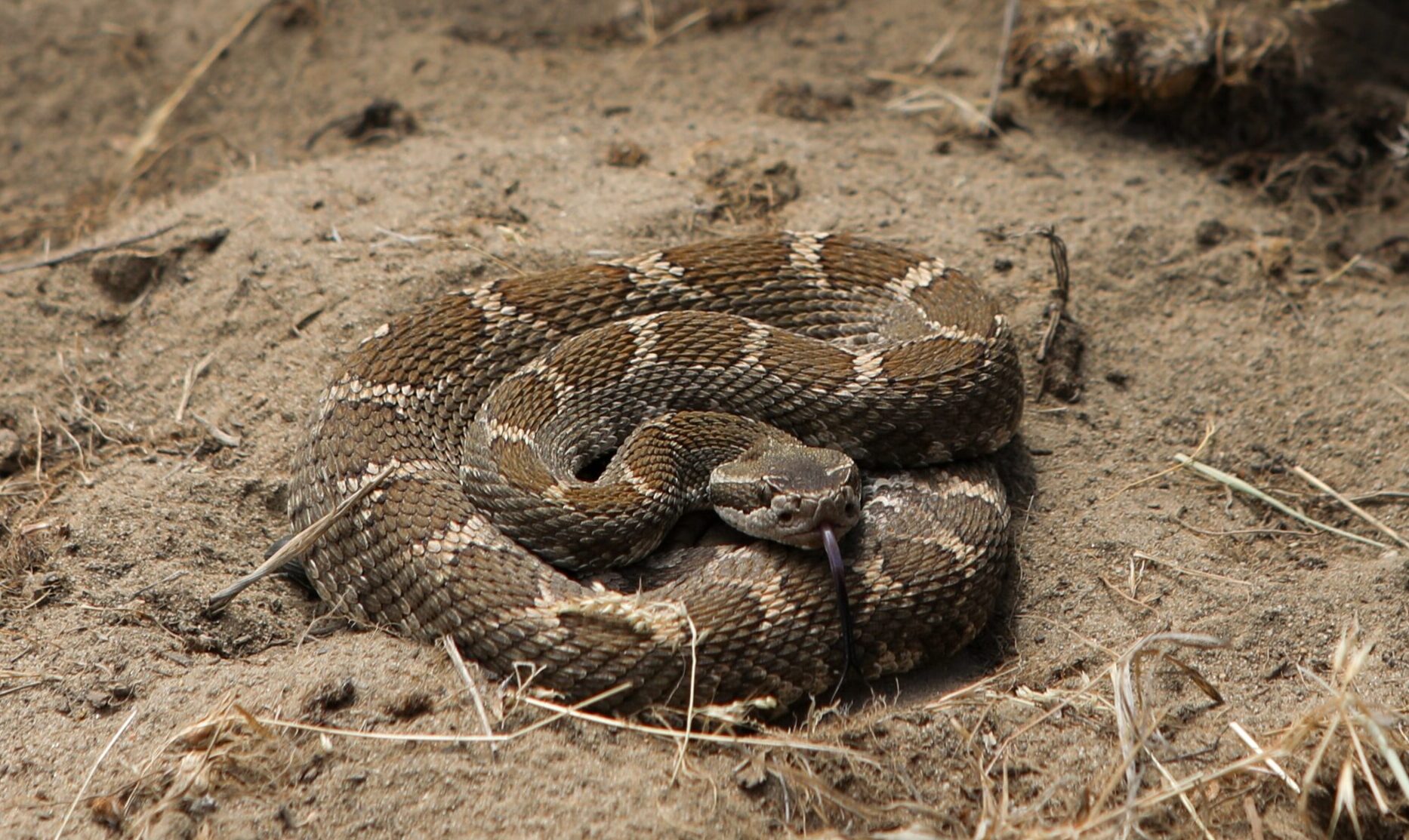
In the Okanagan desert, snakes offer lessons on protecting a fragile ecosystem
For two decades, researchers at the Nk’Mip Desert Cultural Centre have tracked snakes across syilx homelands — while helping people appreciate the often-feared creatures
-
Beloved on the powwow circuit, young boy’s connection to the drum inspires
Now four, Waseskwan Redcrow was dancing ‘before he could even fully walk’ — his family says participating in powwows has brought them joy and belonging